Production workflow automation for energy
Turn energy paperwork into execution.
Gridline reads the documents, applies your rules, pauses for approval, and writes the result to the systems your team already uses.
Free to build · No card · Upgrade only for live runs
- 10–30 min
- per billing cycle
- 96.4%
- straight through
- 20+
- energy projects served
- Every run
- reviewed and audited end to end
The platform
From utility statement to subscriber invoice. Automatically.
One run of the pipeline, end to end: ingest, extract, allocate, generate, sync, deliver. An approval gate runs before anything leaves the system.
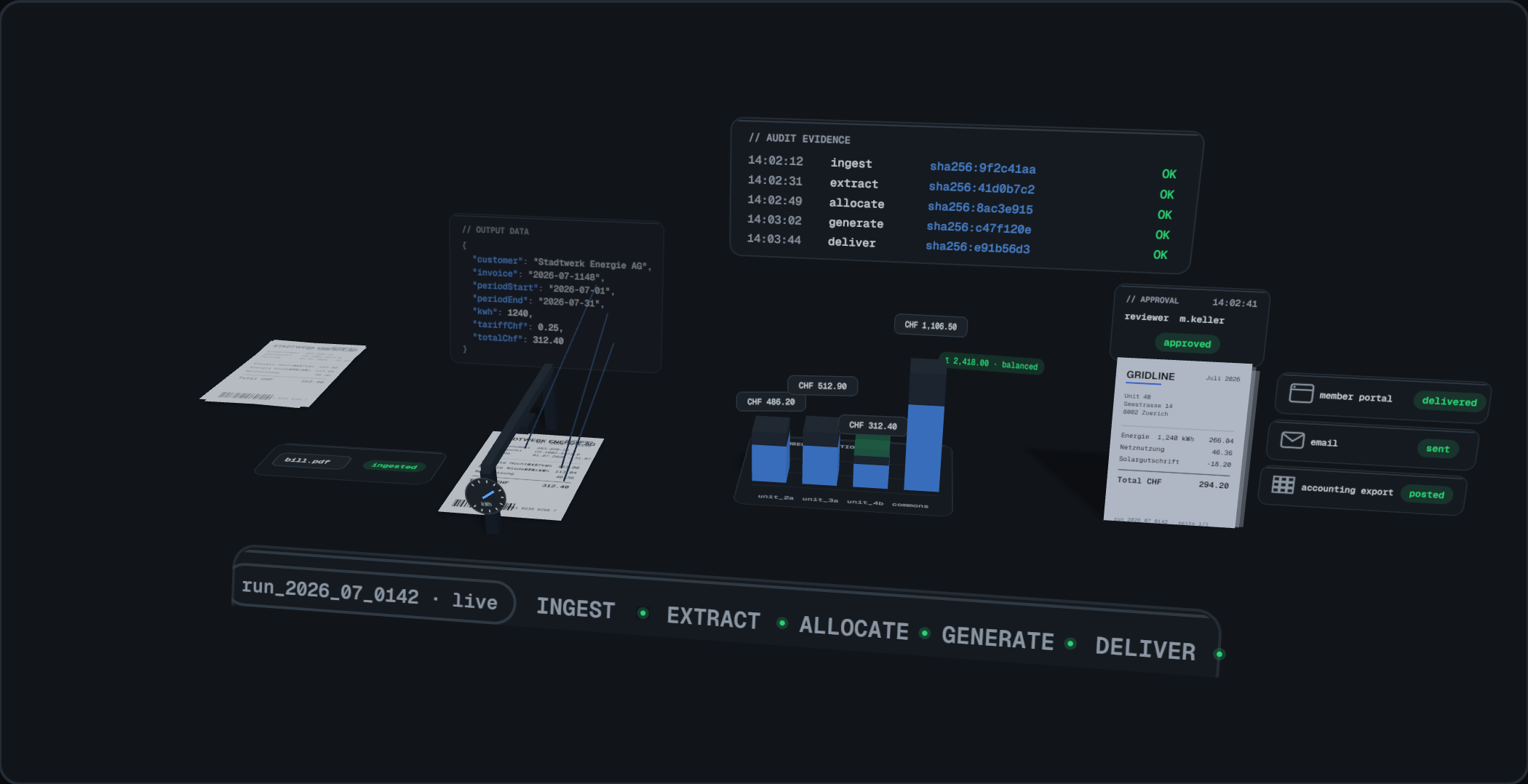
- 01 · Ingest
- 02 · Extract
- 03 · Allocate
- 04 · Generate → approve
- 05 · Sync + deliver
Real screens
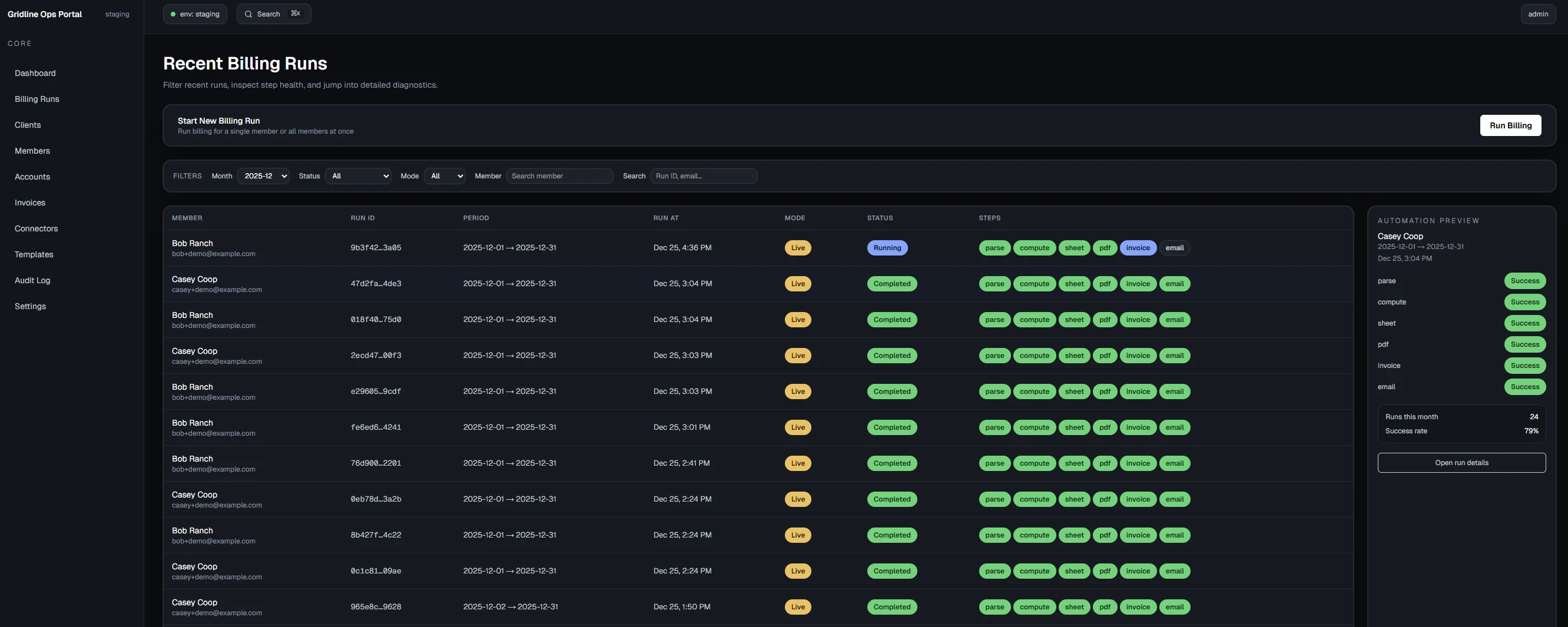
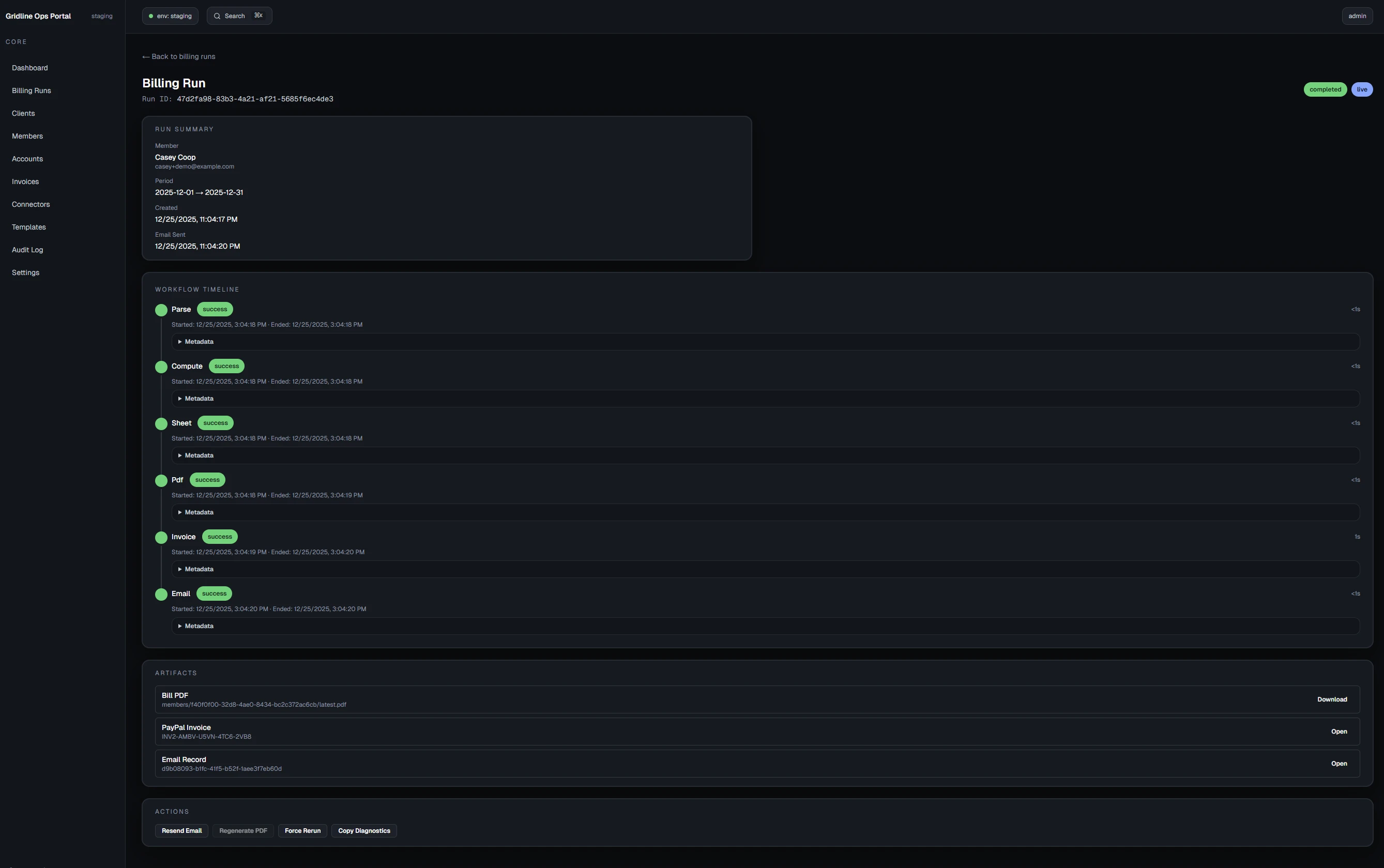
See Gridline Platform in action
Community solar billing was our first workflow. Real screens, no mockups.
Track record
Built on real operational knowledge
Not just document AI. Domain expertise built into every extraction.
Positioning
Why not just use a general document tool?
You could run utility bills through any document AI. It'll extract text. Maybe even some numbers.
What it won't do:
- Know that a "community solar credit" isn't the same as a "payment received"
- Understand how allocations work across subscriber classes
- Recognize when a format change is routine vs. when something's actually wrong
- Handle the edge cases that aren't in any training set
We built Gridline on years of community solar billing: not just documents, but the operational knowledge of what matters and what breaks.
That's why most bills process automatically, and why review is reserved for the few that need it.
| General Document AI | Gridline | |
|---|---|---|
| Training approach | General-purpose + prompting | Domain-specific training |
| Energy terminology | Learned from prompts | Native understanding |
| Edge case handling | Requires custom rules | Built into model |
| Utility format coverage | Build per customer | 30+ pre-built |
| Human review needed | Frequent | Exception-based only |
| New format adaptation | Days to weeks | Hours |
Before / with
The difference
What changes when manual processes become automated workflows
Before Gridline
With Gridline
- 2-5 days every month on billing
- Copy-paste from PDFs into spreadsheets
- Manual invoice creation, one by one
- Mistakes caught after invoices sent
- No vacation during billing week
- Billing runs complete in minutes
- Credits extracted automatically from PDFs
- Statements and invoices generated together
- Review flagged items before anything sends
- Full audit trail if anything looks wrong
The product
The universal workflow for energy projects
A six-step pipeline for any energy operations process - from document ingestion to delivery
Ingest
PDFs, forms, meter data - any document type
bill.pdf Extract
Fields and tables pulled with confidence scores
parsed_data.json Allocate
Apply rules, splits, tariffs, rate schedules
allocations.json Generate
Statements, filings, packets
statement.pdf Sync
Create transactions in accounting and payments
invoice_id Deliver
Portal, email, full audit trail
delivered Approve A human approves the exact reviewed data before any external write.
Production workflows
Running real billing on two continents
Each workflow is a config plus a few step functions on one universal pipeline - not a new app. Humans approve before anything with money attached moves.
| Workflow | Region | Systems it drives | Status |
|---|---|---|---|
| Community Solar Billing | United States | Utility bills · Google · PayPal · Email | Production |
| Solar Project Billing | Switzerland | SolarManager · Bexio · Google · Email | Production |
| vZEV Invoicing | Switzerland | Zevvy (browser automation) · Bexio | Production |
| Payables & Contract Intake | US & Switzerland | Email & PDF intake · Accounting systems | Coming Q3 |
| Interconnection & Permitting | United States | Utility portals · Forms · RFI tracking | Coming Q3 |
| Project Finance | United States | Data rooms · Compliance reports | Coming Q3 |
Measured outcomes
The numbers these workflows produce
Published metrics from the billing workflow running in production
Cycle time
10–30 min
Close a billing cycle in 10–30 minutes per project vs 1–3 days manual. From bill PDFs to delivered statements with full audit trail.
Straight-through rate
96.4%
Only low-confidence parses and rule violations route to review, which cuts manual touches by 50–80% per billing cycle.
Artifacts per run
7-12 outputs
Generate 7–12 auditable artifacts per run: bill.pdf, extraction.json, ledger, statement.pdf, invoice, email event, audit log. Every step traced.
Product surfaces
One platform, four role-aware experiences
Behind all four: an automation worker executing steps, pausing for approvals, retrying safely, storing evidence.
Operations workspace
Admins & operators
Admins configure; your analysts run approved workflows, respond to approvals, and inspect run evidence.
Partner console
Implementation partners
Run demos, track pipeline, manage action items, submit workflow requests, access sales assets.
Member portal
Energy members
Self-service bills, usage, savings, invoices, and change requests - cuts support load for your team.
Secure statement portal
Invoice recipients
A signed, run-scoped link to one statement and invoice. No account, no access to anything else.
Safety is built into the flow
Paused by default
Every new deployment starts paused. Nothing runs live until you activate it.
Zero-write test runs
Reads are real, writes are previews. Pilot a workflow without risking anything.
Approval gates
Humans approve before anything with money attached moves. Approvals record a hash of the exact data reviewed.
Immutable evidence
Every run pins the exact version it executed, and failed attempts, retries, and reruns stay in the record.
What you get
Built for operations teams who need workflows, not features
Documents processed automatically
Upload PDFs, forms, emails. Gridline extracts data, applies rules, and generates outputs - no copy-paste, no manual data entry.
Human-in-the-loop when needed
Low-confidence extractions get flagged for review. You validate before anything gets delivered.
Full audit trail + reruns
Every workflow run is traceable. See exactly what happened at each step. Re-run any process without starting from scratch.
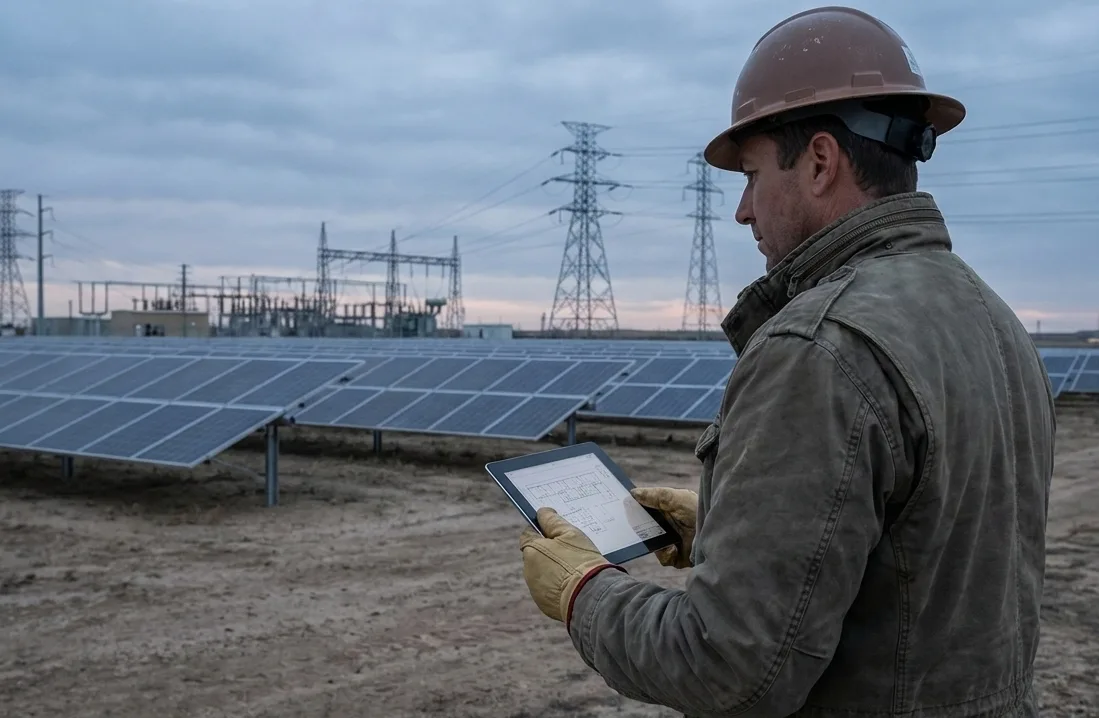
"We used to spend 3 days every month on billing. Now it runs in under an hour with full audit trails."
Evidence built in
Each browser action is screenshotted into the run details, so operators can replay the whole session.
Build it free. Take it live when ready.
Start with safe tests and zero-write rehearsals. If you want a guided look first, book a demo with the team.